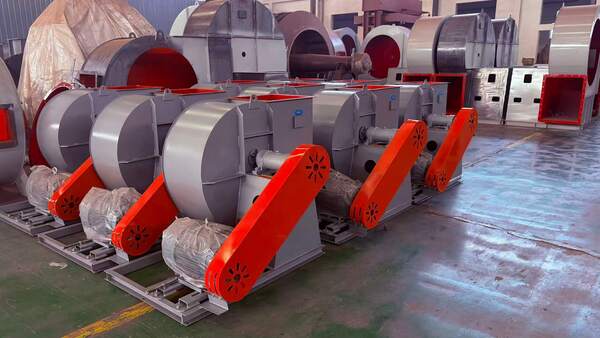
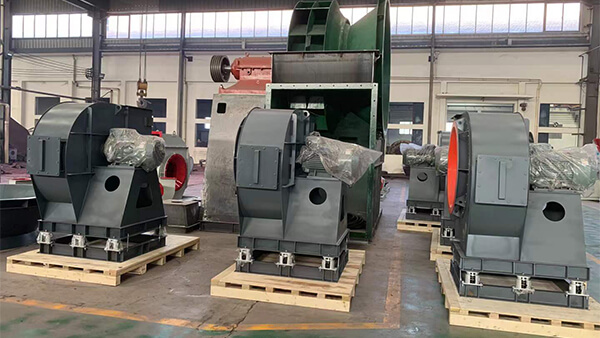
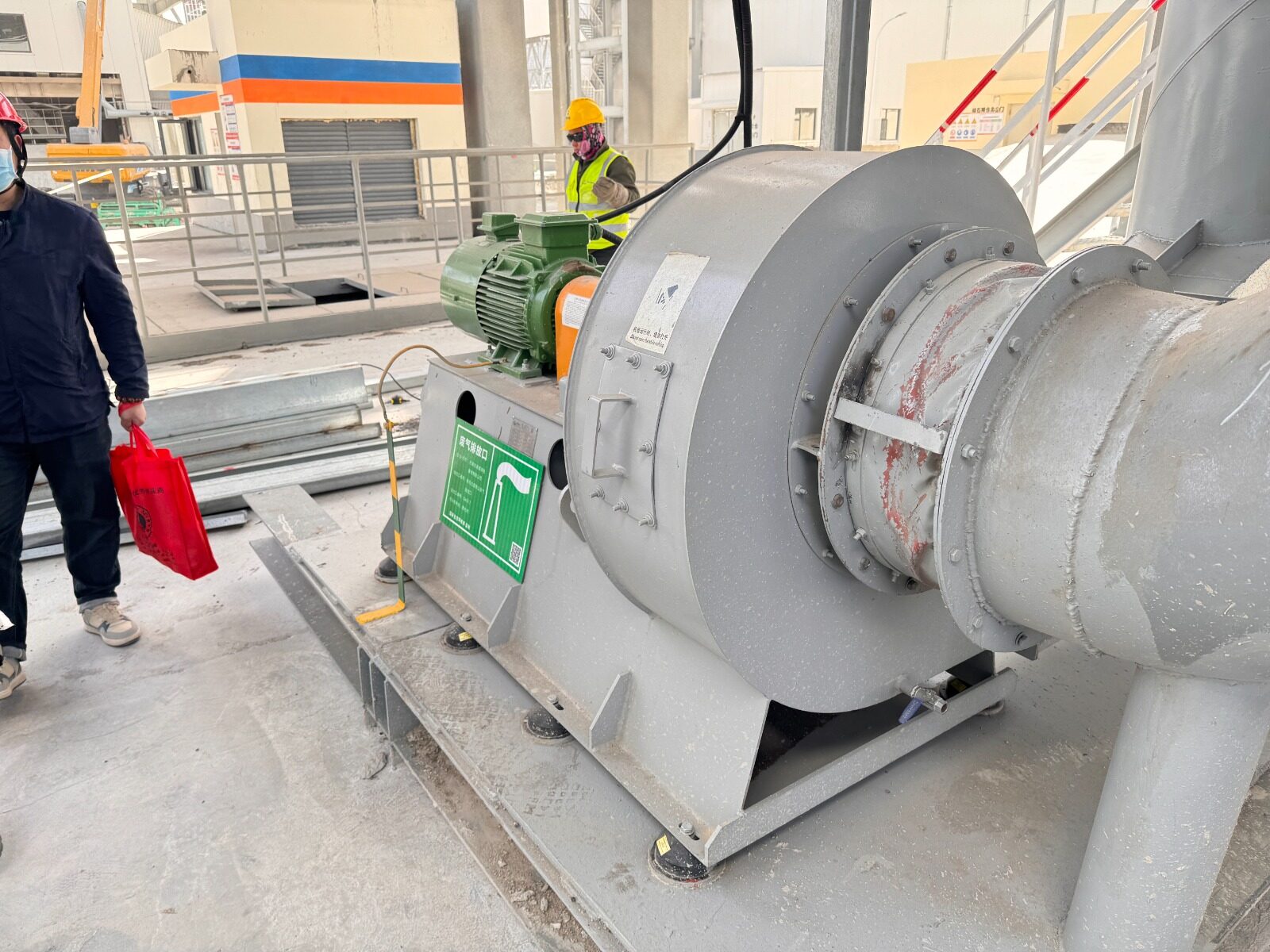
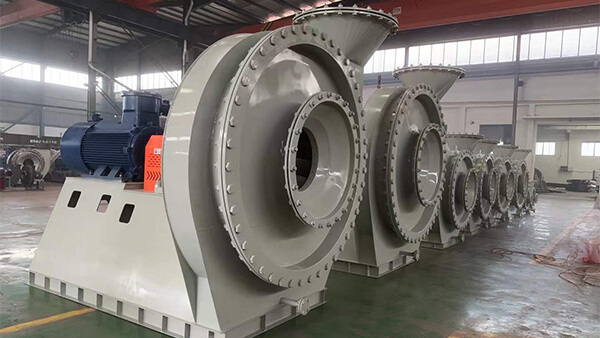
When a centrifugal blower fails on a cement kiln induced-draft line, on a boiler FD/ID system, or in a steel mill’s process gas train, the loss is rarely limited to the machine itself. Downstream production stops, the EPC contractor absorbs schedule penalties, and the plant owner starts asking why the rotating equipment package was approved in the first place. On a project of this scale, a single undersized bearing or a poorly matched impeller curve can turn into weeks of downtime and a six-figure liability question.
Consequently, experienced EPC procurement officers and mechanical engineers do not search “buy industrial fan.” They arrive with a P&ID reference, a set of process gas parameters, and a compliance checklist, looking for a manufacturer that can be verified against international standards rather than a catalog reseller. This guide walks through what that search actually looks like — and where the real engineering differentiation sits.
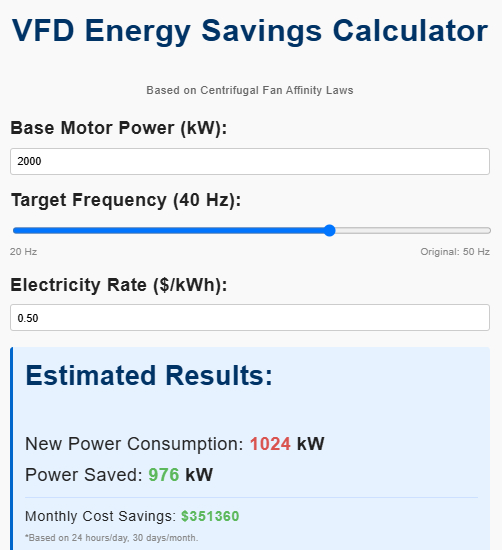
Why Fixed-Speed Dust Removal Blowers Waste So Much Energy?
Before a single quotation is reviewed, procurement teams filter suppliers against a compliance checklist inherited from process safety and reliability engineering. For heavy-duty rotating equipment, that typically includes:
- Alignment with API 673 design philosophy for centrifugal fans in petroleum, chemical, and gas industry services
- ATEX or equivalent explosion-protection certification for hazardous gas atmospheres
- Fully engineered skid-mounted packages, rather than a bare shaft assembly shipped for field integration
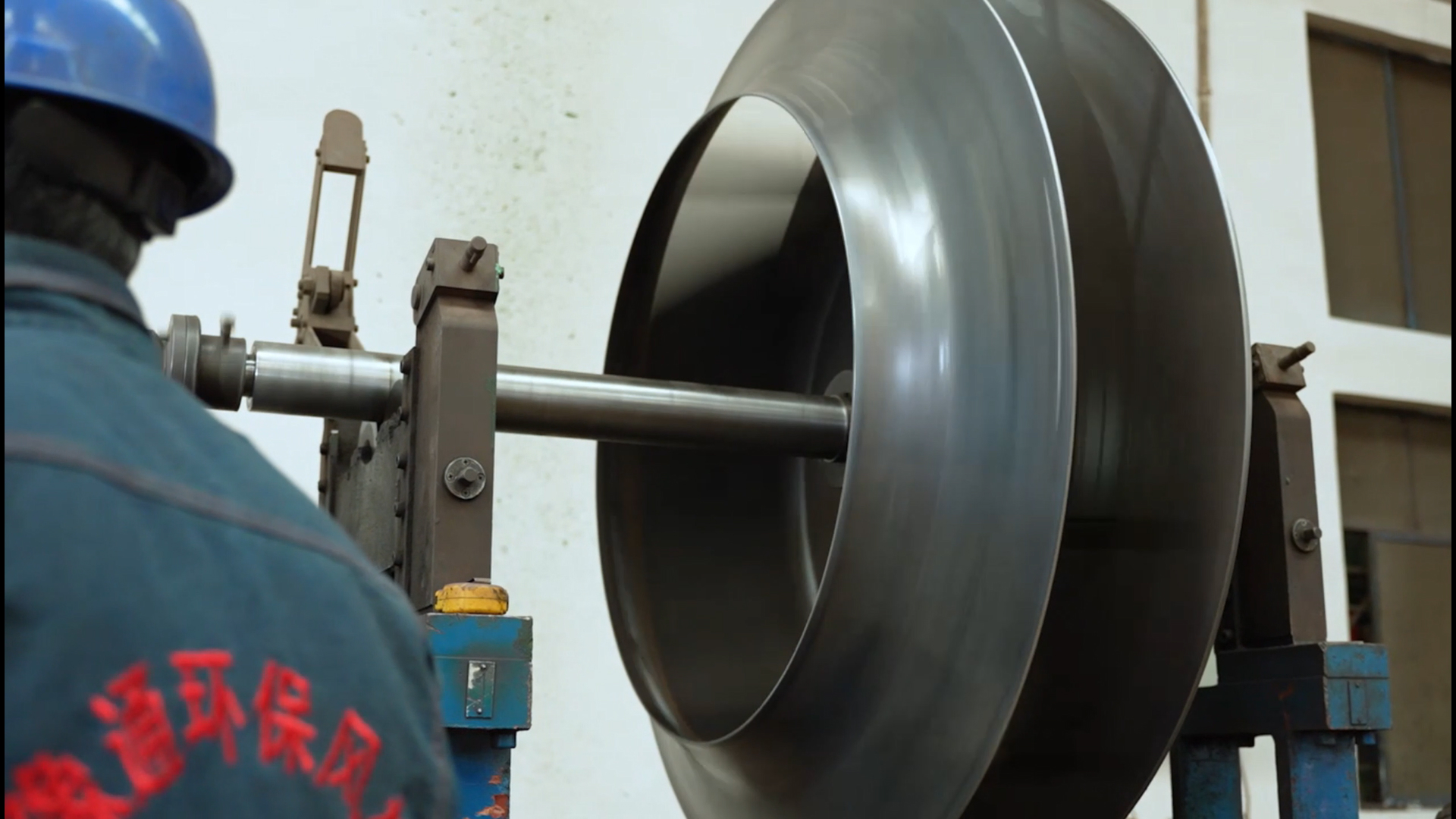
- Documented dynamic balancing grade per ISO 21940, verified on a real test bench — not asserted on a datasheet
This last point is where most fan suppliers fall short. Much of the industry still ships rotors balanced to ISO G6.3, a grade that tolerates enough residual imbalance to generate long-term bearing wear and audible vibration at operating speed.
Yutong EP Blower mandates ISO G2.5 dynamic balancing as the baseline across its entire fleet — a full grade tighter than the G6.3 standard, and more rigorous than the G3.0 threshold many specifications still treat as acceptable practice.
Every rotor is verified on-site at Yutong’s own balancing rig before shipment, with the test report issued as part of the delivery documentation. For EPC engineers, that single number on the data sheet is often the fastest way to separate a genuine manufacturer from a reseller relabeling someone else’s casting.
Pain-Point Engineering for Extreme Working Conditions
Standard fan curves assume clean, ambient-temperature air. Real EPC projects rarely offer that condition. The gas stream engineers are actually specifying tends to fall into one of three demanding categories, each requiring a different material and mechanical response.
Corrosive gas and VOC streams. Acidic exhaust from scrubbers, pickling lines, or chemical process vents will destroy a mild-steel impeller within a single operating season. To solve this, Yutong builds FRP (fiberglass-reinforced plastic) anti-corrosive centrifugal blowers with chemically resistant resin systems and mechanical seals rated for the specific gas composition, rather than a generic packing gland that leaks under sustained exposure.
High-temperature kiln and boiler service. Induced-draft (ID) fans operating above 500°C on cement kilns or waste-heat boilers place the bearing assembly under continuous thermal load. Yutong addresses this with high-temperature alloy impellers and a water-cooled bearing housing with a circulating cooling loop, keeping bearing temperatures within design limits even during sustained high-temperature excursions or short-term upset conditions.
Heavy-dust metallurgical and cement duty. Abrasive particulate in kiln off-gas and sinter plant exhaust erodes standard impeller blades within months. Yutong’s response is a thickened impeller profile combined with hardened wear-resistant liner plates at the highest-erosion zones, extending mean time between overhaul without adding unnecessary rotating mass.
| Parameter | Typical Standard Fan | Yutong Custom Heavy-Duty Blower |
|---|---|---|
| Dynamic balancing | ISO G6.3, often self-certified | ISO G2.5, verified on in-house test bench |
| Bearing housing (high temp) | Air-cooled, standard grease | Water-cooled circulating loop, SKF/FAG bearings |
| Corrosive gas handling | Coated carbon steel | FRP construction with matched mechanical seal |
| Abrasive dust service | Standard-gauge impeller | Thickened impeller with hardened wear liners |
| Engineering documentation | Limited datasheet only | 3D CAD/DWG, performance curves, full data package |
Application-Specific Sizing and Retrofit Capabilities
Procurement rarely starts with a clean-sheet design. More often, an EPC engineer is sizing a replacement fan for an existing duct network, or specifying a new unit for a defined system role — an FGD/SCR booster fan on a power plant flue gas train, a forced-draft (FD) fan feeding a cement kiln, or a large-volume double-suction unit in Arrangement F configuration for applications where flow exceeds what a single-inlet design can efficiently deliver.
In each case, the deciding factor is not raw horsepower but aerodynamic curve matching. A blower selected purely on flow rate and static pressure, without checking where the operating point actually lands on the fan curve, tends to fail in one of two directions: oversized units run inefficiently against a throttled damper and burn excess power for years, while undersized units choke against real system resistance and never reach the delivery pressure the process requires. Yutong’s engineering team works from the actual duct resistance curve and site elevation data to confirm the operating point sits inside the efficient band of the performance curve before a quotation is issued — not after commissioning reveals the mismatch.
Complete Engineering Deliverables & CAD Sizing Support
By the time a rotating equipment package reaches the detailed design phase, the procurement engineer needs more than a price. The documentation package typically required includes:
- 3D CAD models in DWG format for layout and interference checking
- Certified performance curves across the full operating envelope, not a single design point
- PDF technical data sheets suitable for direct inclusion in the equipment specification binder
This is where a direct-factory relationship matters. Yutong EP Blower operates from a 16,400 m² manufacturing facility built on more than 25 years of centrifugal fan manufacturing heritage, with an in-house performance test center that validates flow, pressure, and efficiency figures before a unit ever leaves the shop floor. Because engineering, casting, machining, and testing all sit under one roof, non-standard and fully custom configurations move through design review and CAD sizing support without the delays typical of a multi-vendor supply chain.
Conclusion & Engineering Call to Action
Sourcing a heavy-duty industrial blower for an EPC project is ultimately a decision about lifecycle reliability, not just landed cost. A unit that clears the compliance checklist, matches the actual gas composition and temperature profile, and lands correctly on its performance curve will still be running quietly when a cut-rate alternative is already on its second bearing replacement.
If you have a specific application in front of you, send Yutong’s engineering team your operating parameters — airflow, static pressure, gas temperature, and gas composition — and request an Engineering Proposal & Technical Data Sheet built around your exact conditions.