Over the past decade, global EPC contractors have steadily shifted heavy rotating equipment procurement toward China, and the logic is straightforward: integrated casting, machining, and testing capacity under one roof, combined with an engineering cost structure that Western and Southeast Asian suppliers struggle to match on comparable specification. For cement, steel, chemical, and power projects running on tight capital schedules, that combination is difficult to ignore.
The difficulty is that “industrial blower manufacturer in China” covers an extremely wide range of operations — from heavy-duty rotating equipment specialists to light commercial ventilation assemblers and trading companies that relabel someone else’s casting. Selecting the wrong category of supplier for a severe-duty application does not surface as a line-item cost overrun. It surfaces as an unplanned kiln shutdown, a bearing failure on a boiler ID fan, or a corroded impeller six months into service. This guide sets out the evaluation criteria an EPC procurement team should actually apply, then reviews how three categories of Chinese manufacturers measure up against them.
How to Evaluate a Top-Tier Blower Manufacturer in China
Before comparing brand names, procurement officers and rotating equipment engineers should confirm a supplier clears three technical thresholds. These are the criteria that separate a genuine heavy-industry manufacturer from a light-duty assembler.
Criterion 1: Dynamic Balancing Standard. Much of the market still ships rotors balanced to ISO 1940 Grade G6.3 — a tolerance wide enough to generate measurable long-term bearing wear and audible vibration at operating speed. A supplier capable of true heavy-duty work should be able to certify ISO 1940 Grade G3.0 or tighter, verified on an in-house balancing rig rather than asserted on a datasheet. This single figure is one of the fastest ways to filter a serious manufacturer from a reseller, because achieving it consistently requires balancing equipment, rotor design discipline, and quality control that most light-duty shops simply do not carry.
Criterion 2: Severe-Duty Customization. A catalog of standard fan curves is not evidence of engineering capability. The relevant question is whether the manufacturer can engineer around a difficult gas stream: 500°C+ induced-draft service on a kiln or boiler line, acidic or VOC-laden exhaust requiring FRP (fiberglass-reinforced plastic) construction and a matched mechanical seal, or high-abrasion particulate in cement and metallurgical off-gas requiring wear-resistant alloy impellers and hardened liner plates. Suppliers that only offer mild-steel standard units should be treated as unsuitable for these duties, regardless of price.
Criterion 3: Real Manufacturing & FAT. The supplier should operate a physical heavy-fabrication workshop — casting, dynamic balancing, and assembly under direct quality control — rather than outsourcing production to a rotating list of subcontractors. Just as important, every unit should complete a documented Factory Acceptance Test (FAT), with flow, pressure, vibration, and efficiency figures recorded before the unit leaves the shop floor. Without this, the first real performance data an EPC contractor receives is from the commissioning site.
Top Industrial Centrifugal Blower Manufacturers in China
Rather than a simple company-versus-company list, the more useful comparison for an EPC procurement team is by manufacturing segment — because the vast majority of Chinese blower suppliers fall cleanly into one of three categories, and only one of them is built for severe-duty industrial service.
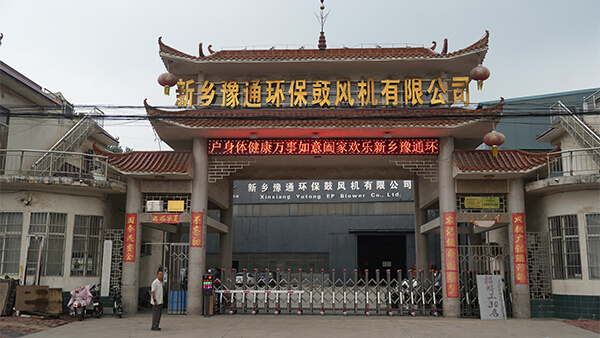
1. Severe-Duty Heavy Industrial Specialists: Xinxiang Yutong EP Blower Co., Ltd. — Best for Severe Environments & Heavy-Duty Custom Engineering
Xinxiang Yutong EP Blower operates from a 16,400 m² manufacturing facility and carries more than 25 years of centrifugal fan manufacturing history. Against the three criteria above, Yutong is a clear outlier in its segment:
- Balancing standard: the entire fleet is manufactured to ISO 1940 Grade G2.5 as a baseline — tighter than the G3.0 threshold this guide sets, and a full grade beyond the G6.3 many competitors still ship, with SKF/FAG bearings specified as standard.
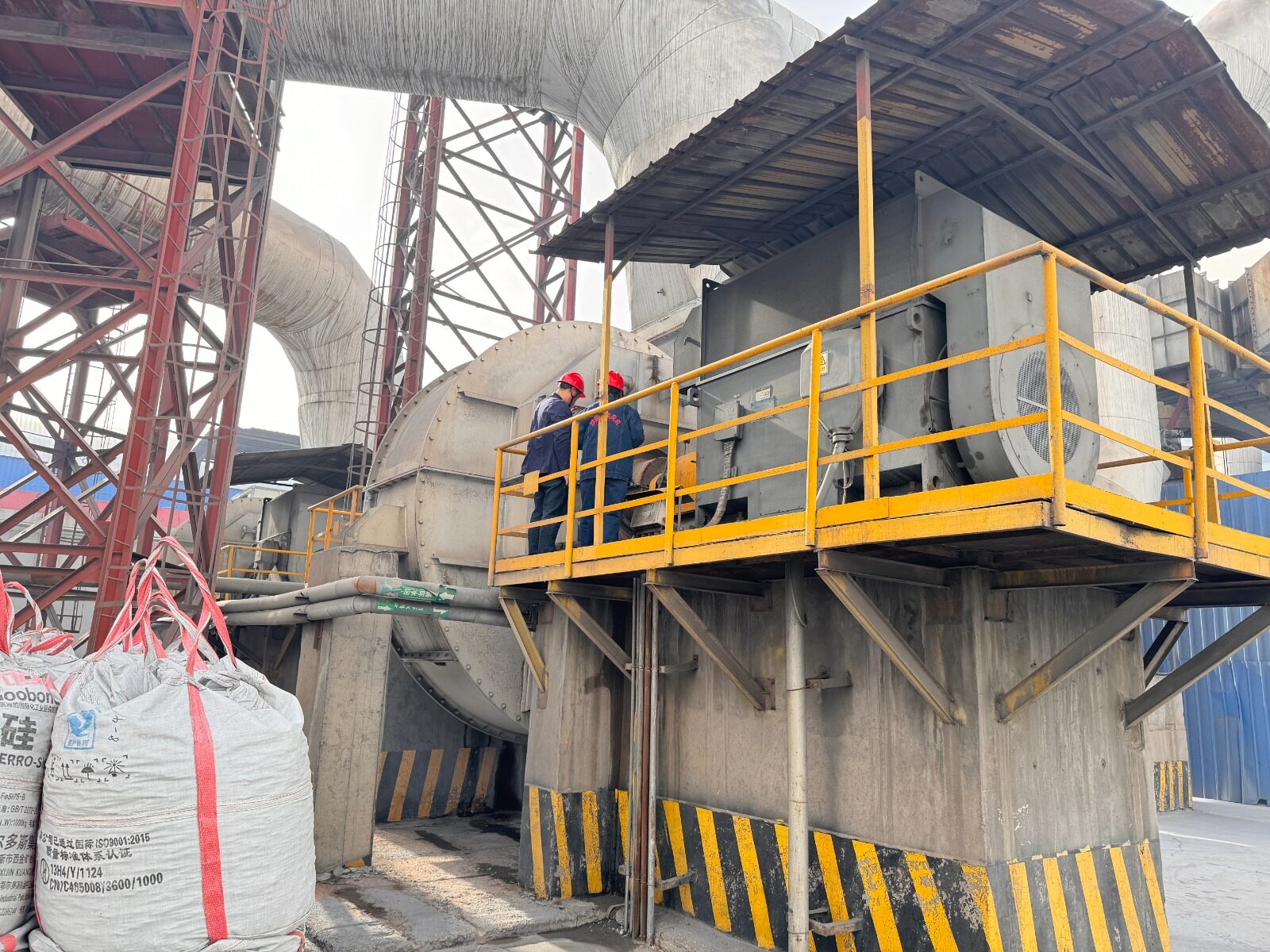
- Severe-duty specialization: the company’s core business is high-pressure, anti-corrosive, and high-temperature induced-draft and forced-draft fans — including FRP construction for corrosive gas streams and water-cooled bearing housings for 500°C+ kiln and boiler service — rather than treating these as occasional custom orders.
- Manufacturing and testing: production runs through an in-house performance test center, with a documented FAT issued alongside 3D CAD models and performance curves as part of the standard delivery package.
For EPC contractors sourcing rotating equipment for cement kilns, steel mills, chemical process lines, or power plant flue gas systems, this profile makes Yutong a source-factory option rather than an intermediary — the kind of supplier that can absorb an unusual gas composition or a non-standard flange spec without a redesign cycle.
2. Commercial & Light-Industrial HVAC Manufacturers — Best for Standard Commercial Ventilation
A second, much larger segment of the Chinese fan industry focuses primarily on commercial and light-industrial ventilation — shopping centers, office towers, parking garage exhaust, and general building air handling. These companies often operate at significant scale and offer competitive pricing on standardized product lines. However, their engineering teams are built around clean, ambient-temperature air rather than corrosive or high-temperature process gas, and their balancing and material specifications are calibrated to commercial duty cycles, not continuous heavy-industry operation. They are a reasonable fit for building services scope, but not for kiln, boiler, or process gas applications.
3. Standardized Dust-Collection Equipment Suppliers — Best for Light Dust Collection Systems
A third segment specializes in standardized fans built to pair with bag-house and cyclone dust collection systems. These suppliers typically offer fast lead times and well-documented standard configurations, which suits straightforward, low-pressure dust extraction scope. Where they fall short is depth of aerodynamic customization — sizing is generally selected from a fixed product range rather than engineered against a specific duct resistance curve, and severe-duty material options are limited. For a defined, low-complexity dust collection package this can be sufficient; for a high-pressure or high-temperature process fan, it is not.
Conclusion & Engineering Call to Action
Company size and factory footage are not, by themselves, indicators of severe-duty engineering competence. The more reliable filter is whether a manufacturer can document its dynamic balancing grade, demonstrate real material and mechanical solutions for corrosive, high-temperature, or abrasive gas streams, and back every unit with a real Factory Acceptance Test. Applied consistently, that filter separates a small number of genuine heavy-industry manufacturers from a much larger pool of commercial and light-duty suppliers.
If your project involves a difficult gas composition, an elevated temperature profile, or a non-standard duct configuration, Yutong EP Blower’s engineering team can review your operating parameters directly and prepare a tailored technical proposal and CAD data package for your application.