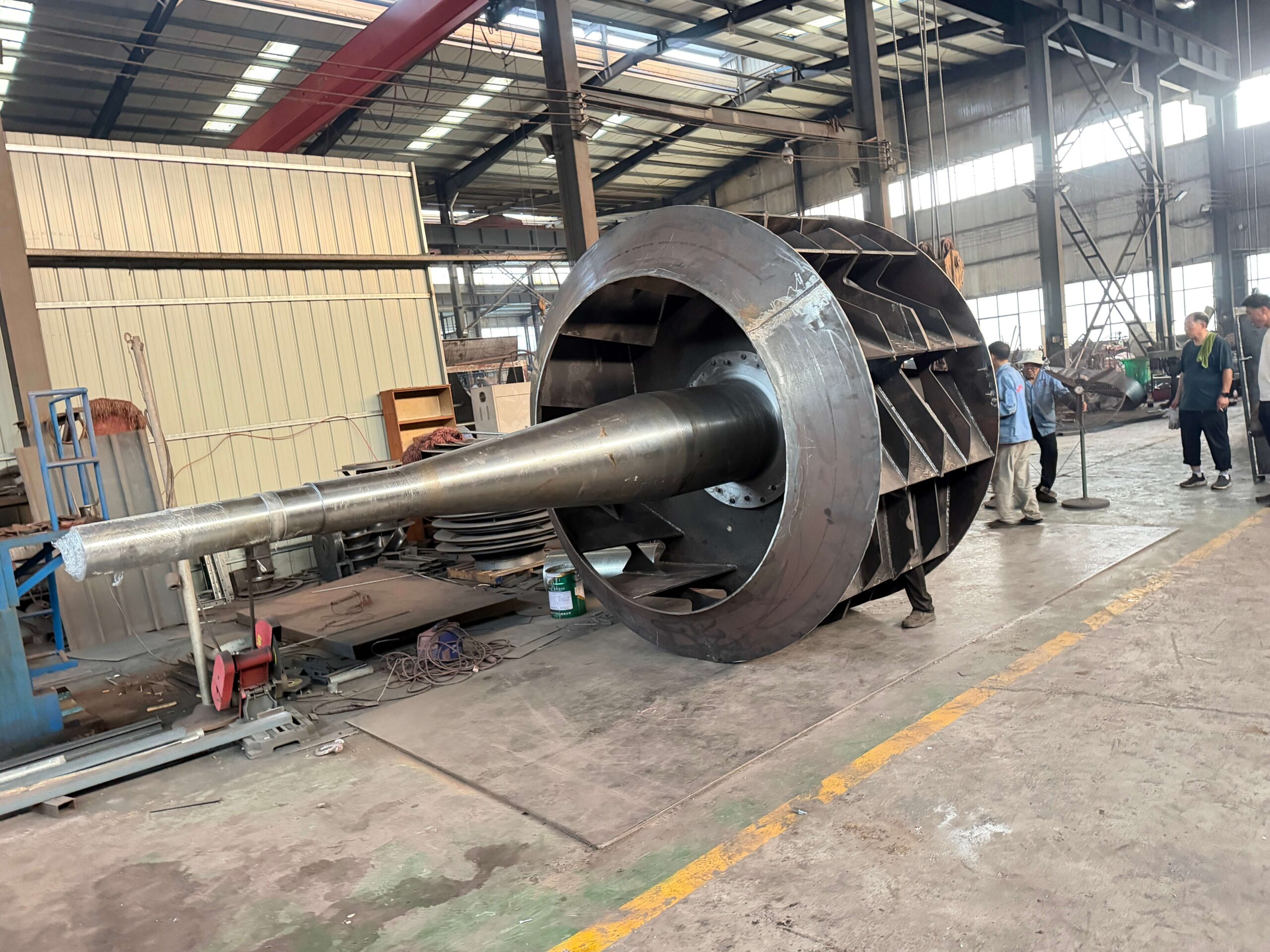
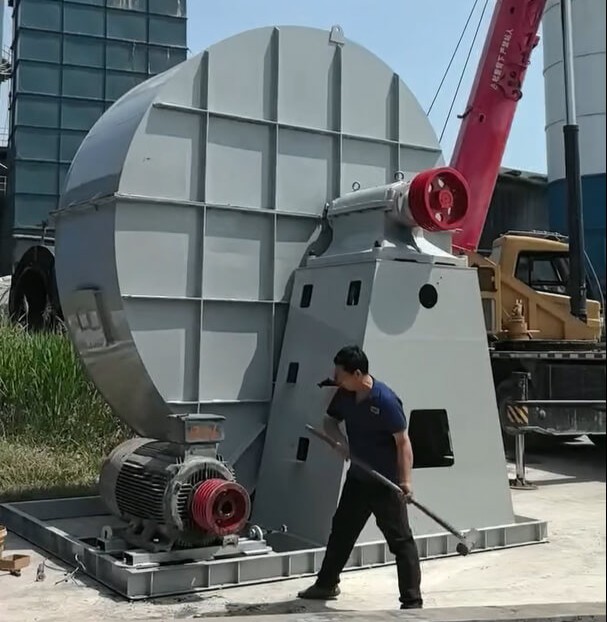
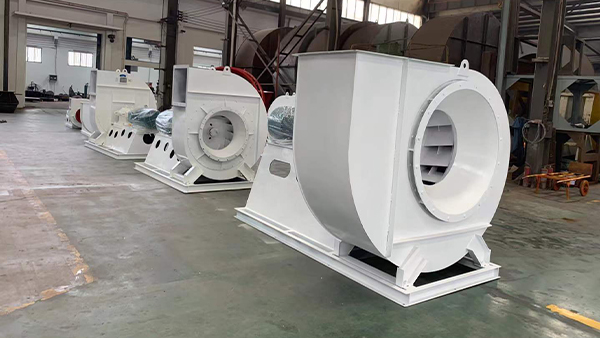
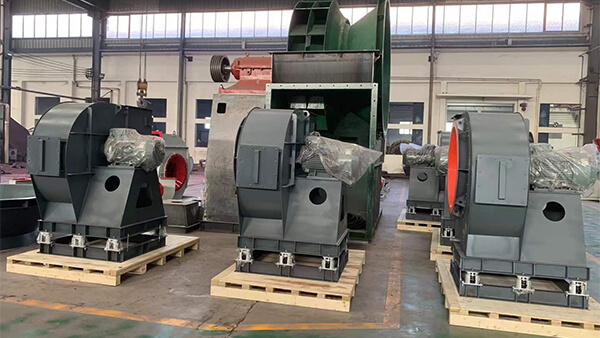
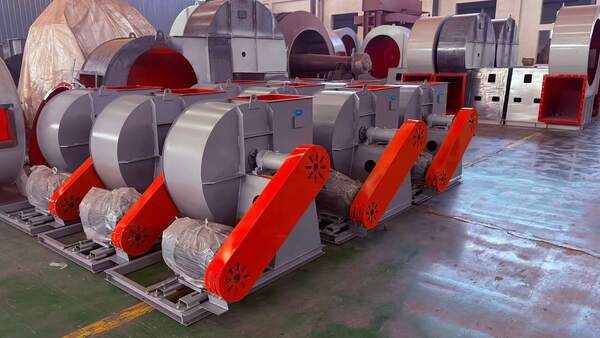
A blower can’t hit its pressure target. The fastest fix on most job sites is the same: go one size up on the impeller.
It feels safe. A bigger wheel moves more air and builds more pressure. What it doesn’t feel like is a decision that can multiply the required motor power by 32 times.
That number isn’t an exaggeration. It comes directly from fan affinity law physics — and most field engineers have only ever learned half of it.
The Instinct That’s Wrong: “Just Go One Size Up”
Everyone in rotating equipment knows the speed law. Double the fan speed, and power goes up by the cube: 2³ = 8 times the power for double the rpm. That relationship gets taught early, and VFD suppliers have built entire sales pitches around it.
Diameter doesn’t get the same attention. It should — because it’s far less forgiving.
Two Affinity Laws, Not One
Fan sizing actually involves three separate relationships, and conflating them is where the trouble starts.
| Variable Changed | Flow (Q) | Pressure (H) | Power (P) |
| Speed (n), same wheel | Q ∝ n | H ∝ n² | P ∝ n³ |
| Full geometric similarity (swap to a larger, similarly-proportioned fan) | Q ∝ D³ | H ∝ D² | P ∝ D⁵ |
| In-casing impeller trim (adjust blade width/OD, same volute) | Q ∝ D | H ∝ D² | P ∝ D³ |
Swapping to a genuinely larger, geometrically similar fan model — a full size-up, not a trim — follows the top row. Double the diameter, and power rises by 2⁵. That’s 32 times.
Real frame-size jumps are rarely a full doubling. A 15–20% larger wheel is more typical. Even that modest step raises required power by roughly 2 to 2.5 times.
The third row is the one most field crews have never seen named. Trimming an impeller’s width or OD inside the same casing follows a much gentler cube law — not the fifth-power law of a true size-up. Confusing the two is exactly how a “small adjustment” turns into a motor replacement.
The Standard-Condition Trap
Most blower selections start from a catalog rating in Nm³/h — normal cubic meters per hour, referenced to roughly 20°C and sea level.
That number says nothing about the density of the gas the fan will actually move. At 500°C, or at high altitude, actual gas density can fall to a fraction of the standard-condition value.
Since fan power scales directly with gas density at a fixed volumetric flow and speed, sizing purely off the Nm³/h rating — without converting to actual density — is one of the most common reasons a “correctly selected” fan still misses its target in the field.
The Cold-Start Overload Nobody Sizes For
Density cuts both ways, and this is the half most designs miss entirely.
A fan sized for its hot operating condition is sized for low-density gas. But every startup begins cold — pulling roughly 1.2 kg/m³ ambient air, not the thin gas the motor was rated for.
The math is unforgiving:
| Hot Operating Temperature | Hot Gas Density | Cold-Start Overload Multiplier* |
| 200°C | ~0.74 kg/m³ | ~1.6x |
| 300°C | ~0.61 kg/m³ | ~2.0x |
| 400°C | ~0.52 kg/m³ | ~2.3x |
| 500°C | ~0.46 kg/m³ | ~2.6x |
*Ratio of cold ambient air density (~1.2 kg/m³) to the hot design density, per the ideal gas law at constant pressure. Actual site conditions will vary.
At the same speed, shaft torque tracks gas density almost directly. A motor with no margin for this can trip on overload current the very first time it starts cold — long before the process ever reaches operating temperature.
Engineering Ways Down, Not Just Up
None of this means a low-pressure fan is stuck underperforming forever. It means diameter shouldn’t be the first tool reached for.
- CFD-optimized passage narrowing. Reducing the impeller’s exit width — the b₂ dimension — inside the existing casing follows the gentler trim-law curve, not the fifth-power similarity law, for a fraction of the power penalty.
- VFD speed control. Where flow demand actually varies, a variable-frequency drive works within the cube law instead of the fifth-power law — and lets the fan run at design speed only when full output is genuinely needed.
- Series or multi-stage arrangement. Splitting the required pressure rise across two smaller wheels in series avoids the single-wheel diameter penalty altogether, often at a lower combined power draw than one oversized wheel.
- Density-corrected motor sizing at both ends. Size the motor for actual cold-start density as well as hot operating density — not just the hot condition — so startup current stays inside the motor’s real capability.
Have a fan that’s missing its pressure target, or a motor that trips on cold starts? Submit your actual operating conditions — hot and cold, standard and actual density — and our engineering team will size the correction against your real numbers, not a one-size-up guess.