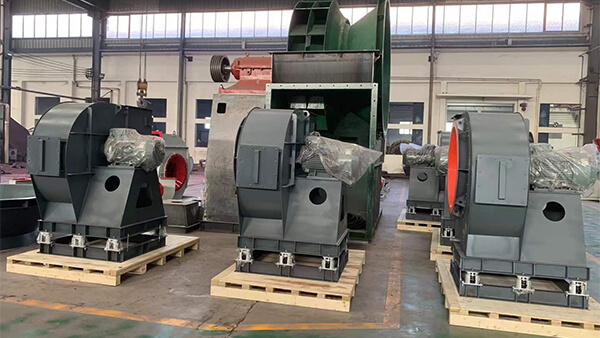
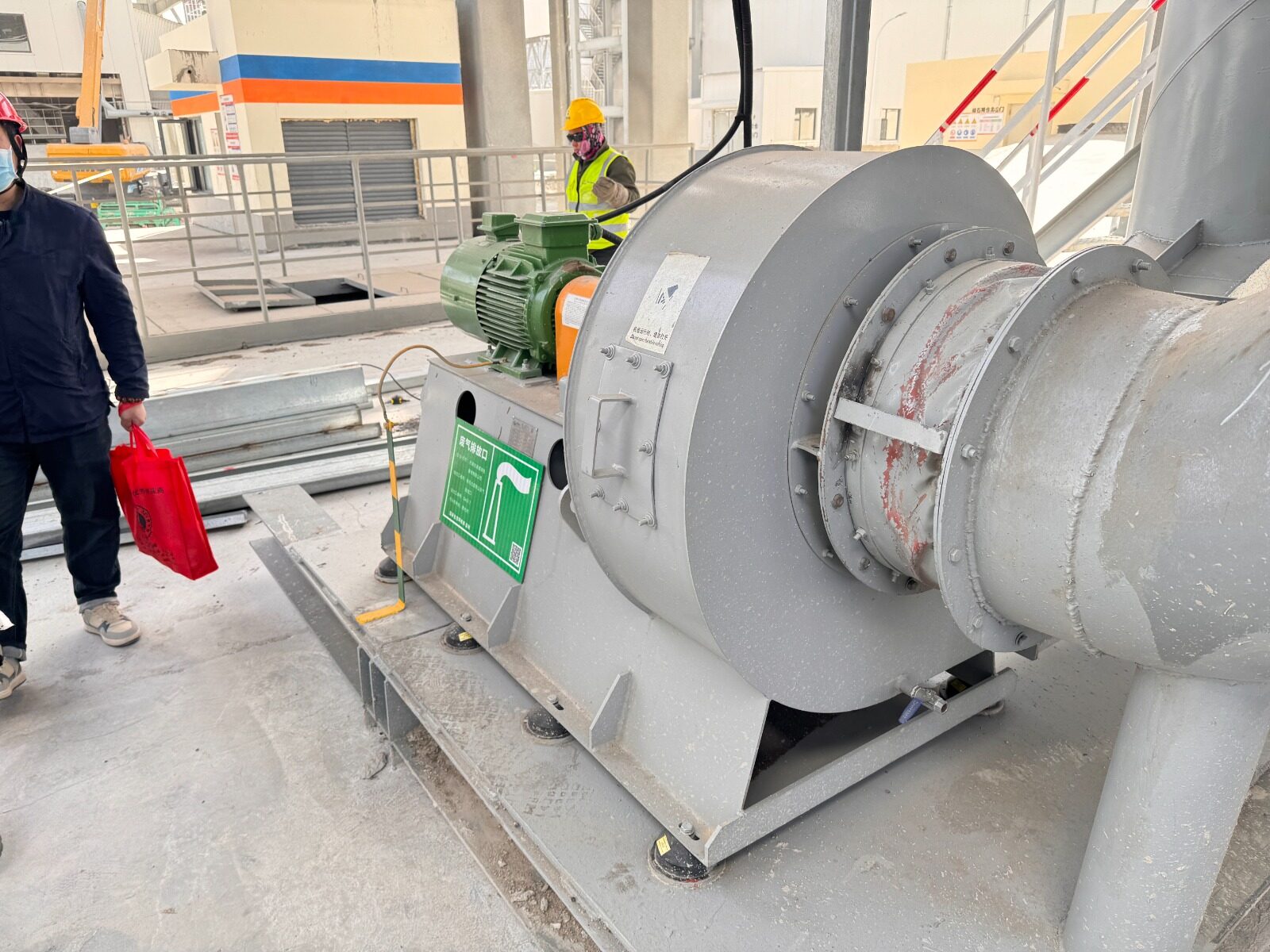
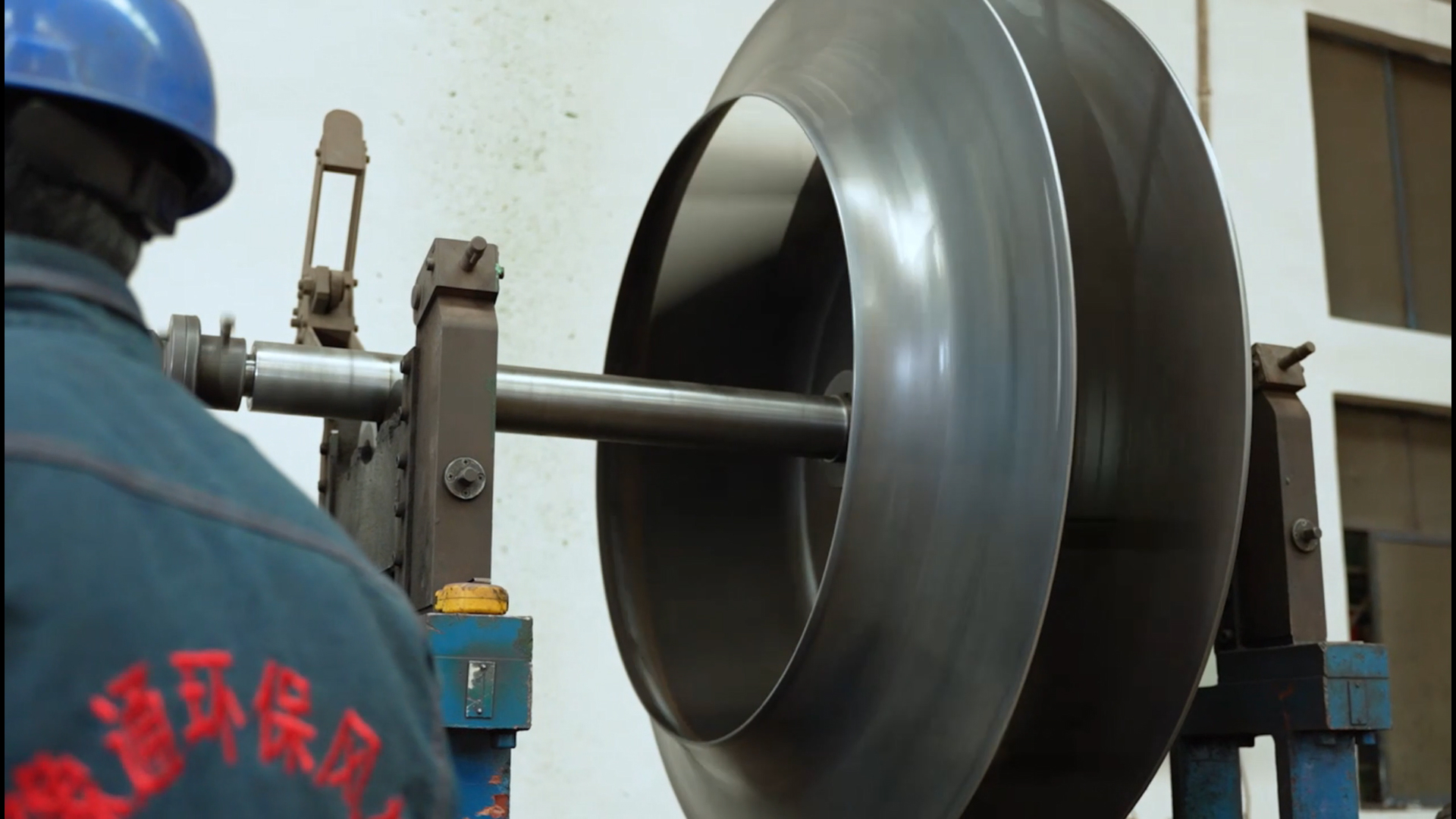
We’re currently fabricating a large centrifugal blower rotor for a steel plant’s sintering flue gas dust removal system — one of the more demanding duty points a blower can be asked to handle, and a good excuse to walk through what actually goes into building a rotor at this scale.
Why Sintering Flue Gas Dust Removal Is a Tough Application
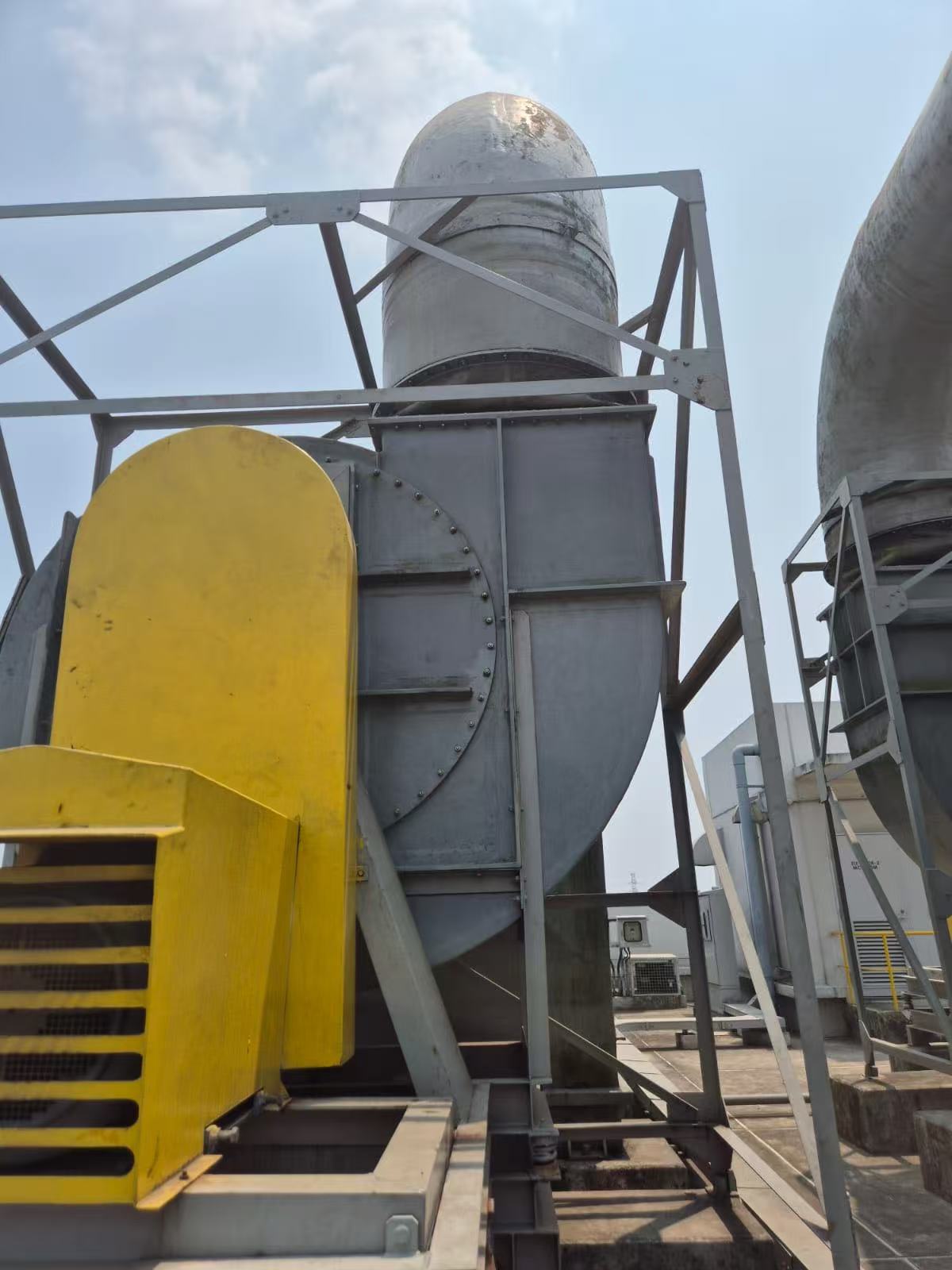
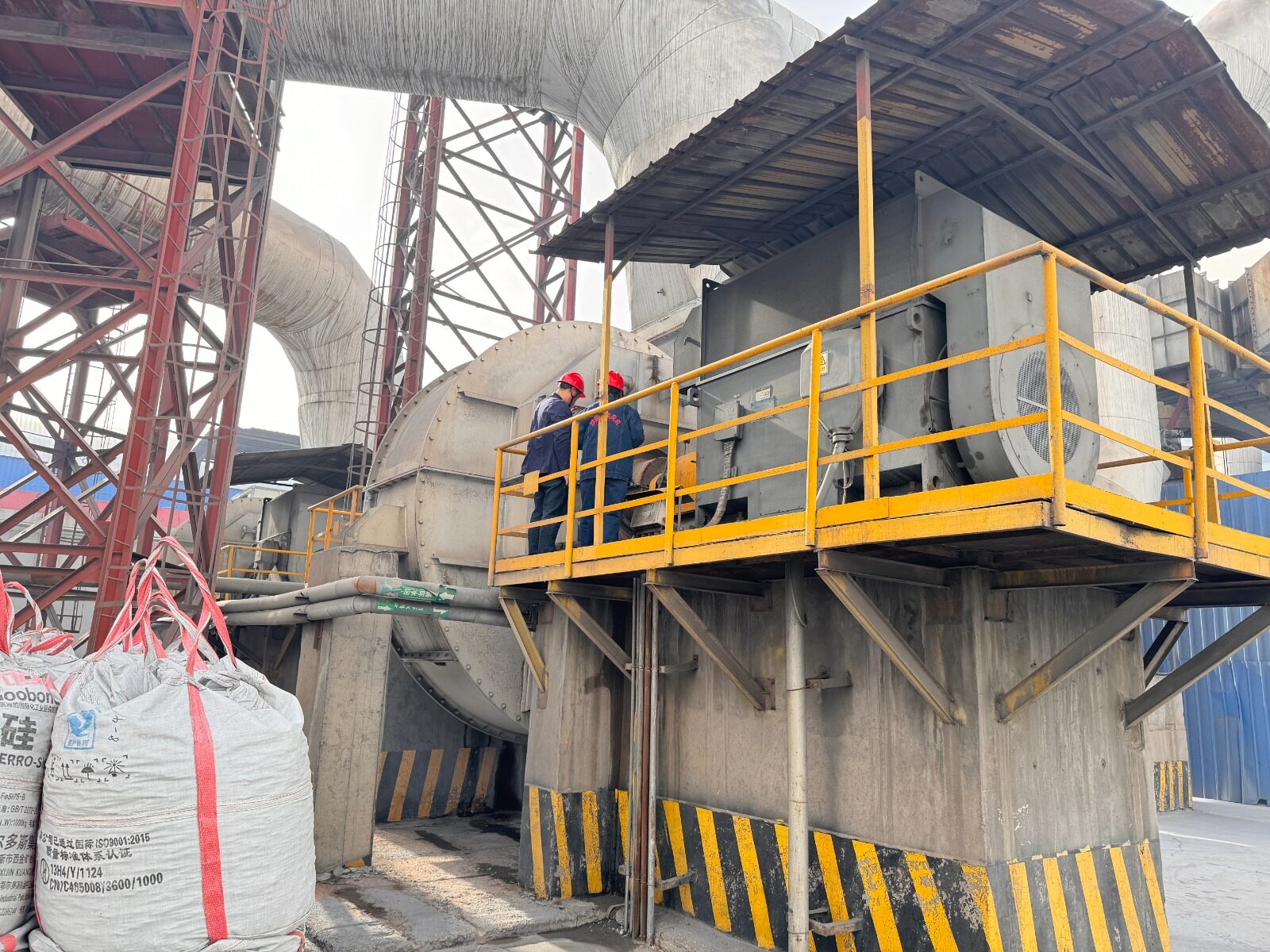
Sintering is one of the dirtiest, hottest gas streams in a steel plant. The blower pulling flue gas off the sintering machine has to move enormous volumes of hot, particulate-laden gas continuously, around the clock, for years between major overhauls. Unlike a clean-air ventilation blower, this duty combines three stresses at once: abrasive dust wearing at the impeller surface, elevated gas temperature affecting material selection and thermal growth, and the sheer mass and inertia of a rotor this size, which makes any imbalance or misalignment far more consequential than it would be on a small unit.
What Goes Into a Rotor This Size
The rotor is a welded steel centrifugal impeller — backward-inclined blades welded between two heavy circular end plates, mounted on a long forged shaft. A few things worth pointing out for anyone who works with this equipment:
Scale. At this diameter and shaft length, the rotor isn’t handled by hand at any stage of assembly — every move relies on overhead crane rigging, and fixturing has to account for a mass and moment of inertia far beyond a standard-size unit.
Blade geometry. The blades are backward-inclined with a straight leading edge rather than a curved aerofoil profile — a common choice for dust-duty impellers, since flatter, more open blade geometry resists material buildup and abrasive wear better than a tightly curved, high-efficiency blade profile would.
Welded fabrication. At this diameter, impellers are welded assemblies rather than castings — individual blade plates fillet-welded to the end discs and hub. That means weld quality control is not a side detail; it is the backbone of the rotor’s mechanical integrity, since a weld defect at this size and rotational speed is a fatigue crack waiting to happen.
Shaft-to-hub connection. The bolted flange interface seated into the hub bore ultimately has to hold true through years of thermal cycling and rotation — precision fit-up here is just as important as the impeller geometry itself.
The Engineering Work Behind a Rotor This Size
A rotor at this scale doesn’t get to skip any of the steps that matter for reliability:
Material and thickness selection. Plate thickness and steel grade have to account for both the abrasive wear expected over the service interval and the stress concentration at every weld joint, particularly at the hub-to-shaft transition where torque is transmitted.
Weld sequencing and inspection. Large fabricated impellers are welded in a controlled sequence to manage distortion, then checked — visually and, on critical joints, with non-destructive testing — before the rotor moves any further down the line.
Dynamic balancing. Once assembly is complete, the entire rotor — impeller and shaft together — goes through dynamic balancing as a single unit. At this mass and diameter, even a small residual imbalance translates into a large centrifugal force at operating speed, so this step isn’t optional; it’s what keeps bearing loads, vibration, and long-term fatigue life within acceptable limits once the unit is installed.
Fit and alignment tolerances. The shaft-to-coupling interface and bearing journal surfaces are machined to tolerances that anticipate the thermal growth this rotor will see in service — a detail that matters more, not less, as the equipment gets larger.
Why This Matters for Plant Operators
For a steel plant, a sintering dust removal blower going down isn’t a minor maintenance event — it can back up the entire sintering line. Rotor quality at the fabrication stage is one of the biggest levers available for avoiding that outcome: a well-welded, properly balanced rotor built from the right material for the duty is what determines whether the unit runs reliably between scheduled overhauls or becomes a recurring maintenance headache.
At Yutong EP Blower, large fabricated rotors like this one go through this same sequence — engineered plate selection, controlled weld procedures, and full dynamic balancing before the rotor ever leaves the shop — because for equipment operating continuously in a steel plant’s dirtiest gas stream, the fabrication quality behind the impeller matters just as much as the aerodynamic design in front of it.