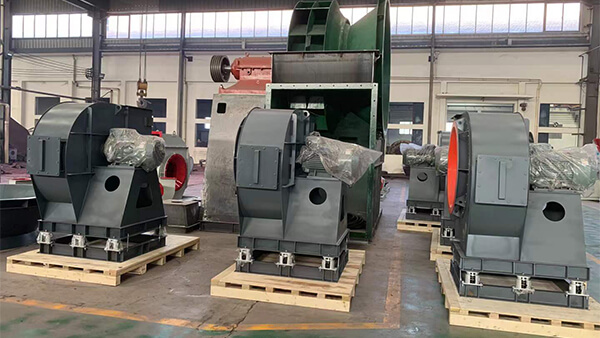
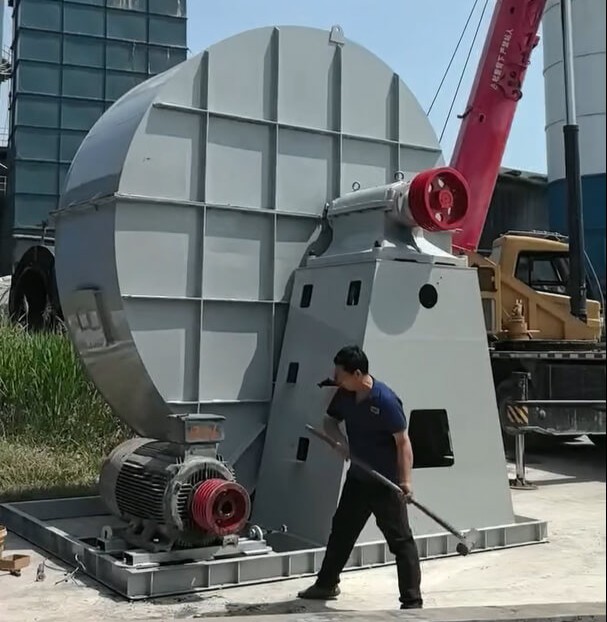
If you’re running a cement kiln, steel mill, power plant, chemical process, mine, or dust-collection system, you’ll likely find a centrifugal blower in the middle of it all, essential, not just a side part, and crucial to keeping the whole setup running. Because these machines keep spinning nonstop, sometimes very fast, vibration is often the first sign that something is failing. If you ignore it, the problem won’t stay small, it can lead to bearing failures, cracked impellers, worn-out shafts, and unexpected shutdowns. The hard truth is that vibration usually can’t be linked to a single clear cause. A bad foundation, crooked alignment, ducts that hit a favorite “resonant” pitch, worn bearings, loose bolts, or a blower that’s operating well away from its designed point, all of these can cause the problem, and most of the time, it’s not just one. Two or even three factors usually team up. Here’s a clear guide to why blowers shake, how to figure out the real cause instead of guessing, and what steps to take for each issue once you’ve identified it.
What Counts as Normal Vibration?
Before you grab a wrench, remember this: no machine spins perfectly smoothly, and that’s exactly how it’s meant to be. It’s not about whether the fan shakes; the real issue is whether that shaking stays within the allowed range for this kind of machine. Engineers often rely on ISO 20816. It sorts vibration risk into four levels using RMS velocity: Normal, typical right after commissioning or repairs; Acceptable, okay for steady, unrestricted use; Alert, don’t ignore it, arrange maintenance; Danger, shut down and handle the issue immediately. How much it allows can change with the machine’s size and how it’s set up, so don’t trust one number you remember, look up the correct table instead. Day to day, the trend matters most: a number that rises bit by bit, or one that suddenly spikes overnight, reveals more than its current level.
What Actually Causes Blower Vibration?
Rotor Imbalance
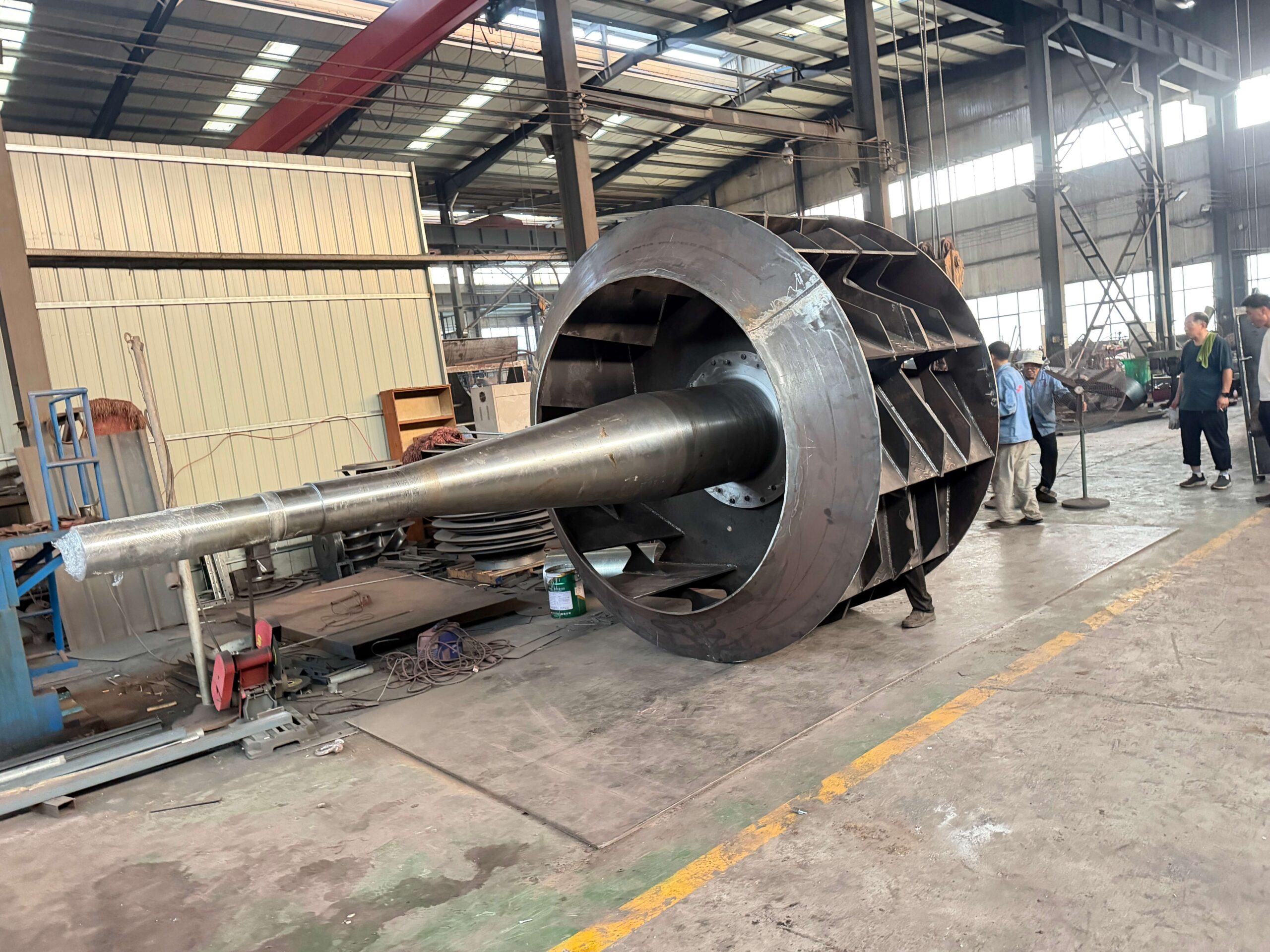
This is the one technicians reach for first, and for good reason — it’s genuinely the most common cause. Dust that builds up unevenly on the blades, blade erosion, corrosion, a repair weld that added weight in one spot, or a casting that was never quite balanced to begin with — all of these throw the rotor’s mass off-center. You’ll usually see it as vibration that’s much stronger radially than axially, that gets worse as speed climbs, and that shows up cleanly at 1× running speed on a spectrum. The fix isn’t glamorous: clean the impeller on a schedule, actually look at it while you’re in there for cracks or corrosion, and don’t skip chemical cleaning if deposits are baked on and hard to remove mechanically. The part people forget is that any time an impeller gets welded, repaired, or has blades swapped, it needs to go back through dynamic balancing before it’s put back to work — otherwise you’ve just reintroduced the exact problem you fixed.
Shaft Misalignment
In most cases, these fit tolerances are tighter than you’d think, around 0.03 to 0.10 mm radially and 0.02 to 0.08 mm axially, depending on the type of coupling. Here’s what confuses people: even a blower that was set perfectly during commissioning can slowly slip out of tolerance later, because the foundation settles, parts expand with heat, or bolts loosen over time. When lining things up, treat the blower-side coupling as your starting point. Adjust the motor until it matches, then tighten all four motor feet evenly. Don’t take any readings until that’s done, because skipping it can cause soft-foot problems. After that, correct angular alignment before checking parallel offset. From the field, here’s a key point: when the magnetic-base dial indicator swings to the lowest spot, its own weight can pull it down, momentarily lifting the probe off the surface and giving you a wrong reading. A rigid, purpose-built bracket clamped to the coupling itself avoids that trap entirely.
A Weak Foundation or Loose Anchor Bolts
As a quick guideline, make the foundation at least ten times heavier than the blower unit, so it can handle the shaking forces created by the spinning rotation. If the foundation isn’t strong enough, don’t just slap on a quick fix, reinforce it or add more support. When anchor bolts have loosened in their grouting, don’t just re-tighten them — remove them, rough up the bolt holes, re-pour, and let the new grout cure at least seven days (a grade stronger than the surrounding concrete holds up better long-term) before moving to the next installation step. A real example: a cooling blower that had been running at 3.0–3.6 mm/s for years — technically “tolerable” but not something you’d want to live with long-term — turned out to have an undersized foundation and loosened anchor bolts underneath it. Rebuilding the foundation properly dropped those readings to 0.45–0.52 mm/s, solidly into “good” territory.
Duct Resonance
Air moving fast through rigid, flange-bolted inlet and outlet ductwork can excite the duct into resonance, and because that ductwork is bolted directly to the blower casing, whatever vibrates in the pipe ends up vibrating in the bearings too. A few things help here: inspect the casing itself and repair or replace it if it’s cracked or worn thin; install flexible connectors (rubber bellows-type joints work well) near the outlet so the connection can absorb movement instead of transmitting it; keep at least five meters of straight duct at the outlet before the first elbow, since bends close to the blower are where turbulence-driven vibration tends to start; and favor opposed-blade louver dampers at the inlet, which spread airflow more evenly and avoid the violent vortex shedding that a poorly chosen damper can trigger.
Bearing Problems
Bearings usually don’t fail out of nowhere — bad lubrication, contamination getting into the housing, ordinary fatigue, or a bearing that was installed wrong to begin with are the usual paths there. You’ll typically notice it alongside a change in sound or a rise in housing temperature, and on a spectrum analyzer it shows up at bearing defect frequencies rather than just at running speed. Staying ahead of it mostly comes down to following the lubrication schedule the manufacturer specifies, keeping housings sealed against dust and moisture, and replacing bearings based on actual condition monitoring rather than waiting for something to fail.
Mechanical Looseness
Loose foundation bolts, a loose bearing housing, play in the coupling, or a loose impeller-to-shaft fit all fall in this bucket, and they tend to produce a telltale signature: vibration at multiple harmonics — 1×, 2×, 3× running speed — rather than one clean peak. The fix is unglamorous but effective: go through every bolted joint in the chain and re-torque it properly, check keyways and retaining features for wear, and replace anything that’s actually worn rather than assuming a re-tighten will hold.
Aerodynamic Instability
Sometimes the blower itself is mechanically fine, and the problem is how it’s being operated. Running far from the best efficiency point — often because a damper is miscalibrated or the duct system has more resistance than it used to — can push a blower into surge or stall, both of which generate pressure pulsations that read as vibration. The fix here is less about the machine and more about the process: check the actual operating flow and pressure against the performance curve, and correct whatever is forcing off-design operation
Matching Symptoms to Likely Causes
A quick reference table, useful as a starting point — though it’s still worth confirming with actual measurement before you commit to a repair.
| Symptom | Likely Cause |
| Strong radial vibration, weaker axial | Rotor imbalance |
| Strong axial vibration | Shaft misalignment |
| Sudden jump after running smoothly | Loose anchor or mounting bolts |
| Only shows up at certain speeds | Resonance |
| Vibration plus new noise or heat | Bearing failure |
| Floor vibration or cracking near the base | Weak foundation |
| Changes with damper position or flow rate | Aerodynamic instability |
| Vibration at multiple harmonics | Mechanical looseness |
| Gradual increase over weeks or months | Progressive wear, buildup, or corrosion |
A Diagnostic Sequence Worth Following
Measure vibration at both bearing housings, radially and axially. Identify which frequency is dominant. Inspect the impeller. Check the bearings. Check alignment against tolerance. Check the foundation for cracking, settlement, or loose bolts. Check the ductwork for resonance and connector condition. Correct whatever you find, then re-measure to confirm it actually worked — don’t close the work order on an assumption.
A Maintenance Rhythm That Actually Prevents Problems
Daily, it’s mostly about paying attention — abnormal noise, unexpected heat, visible shaking during rounds. Weekly, take actual vibration readings and look for leaks or obvious looseness. Monthly, check anchor bolt tightness, inspect flexible duct connectors, and confirm lubrication is where it should be. Annually, or at a major overhaul, go deeper: full alignment check, impeller inspection and cleaning, foundation inspection, bearing condition assessment, and — critically — a dynamic balance check after any repair work.
Why Dynamic Balancing Isn’t Optional?
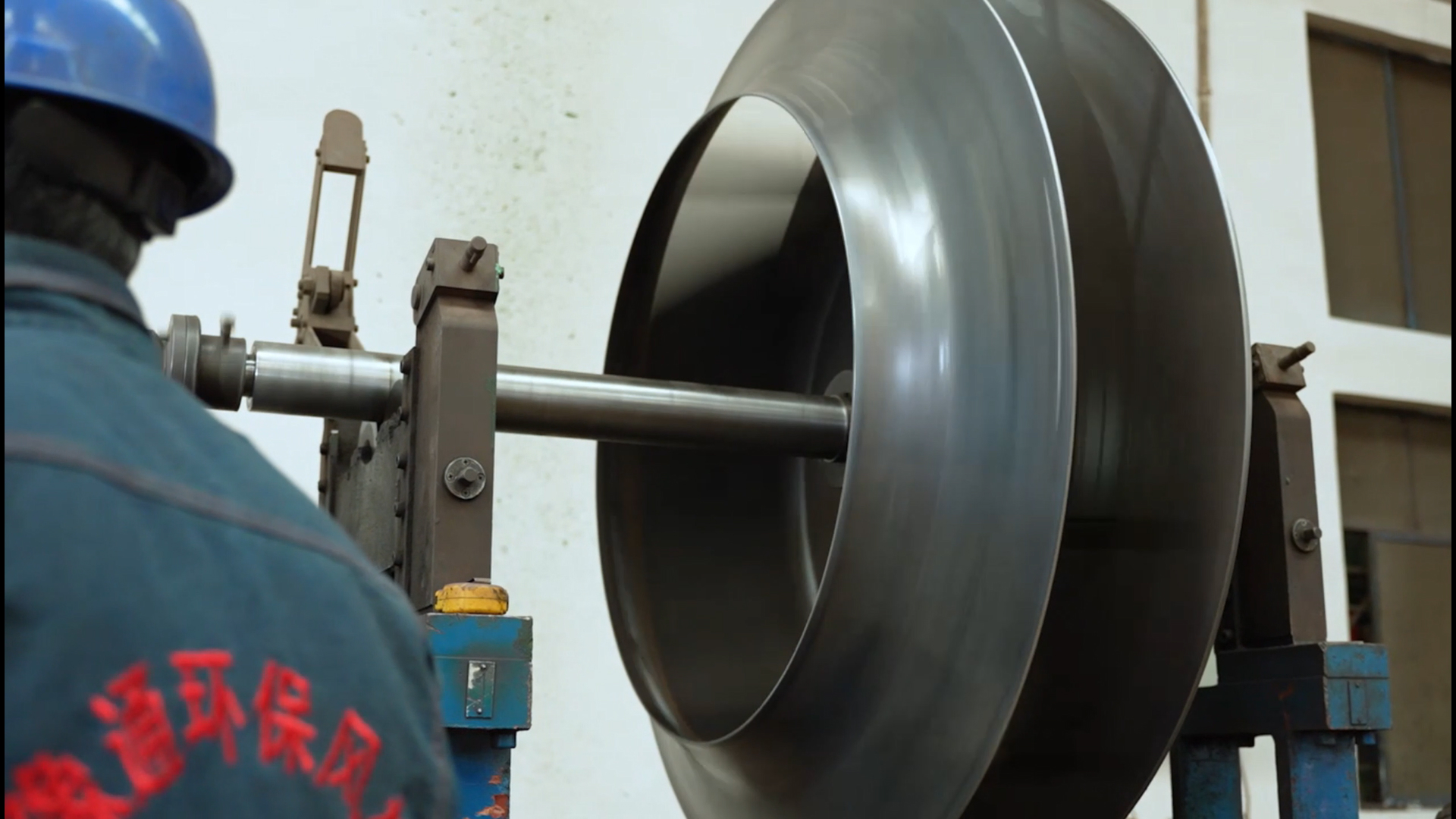
Of everything covered here, imbalance is the one factor you have the most control over before a blower ever ships — and, frustratingly, the one most easily undone by a field repair if balancing doesn’t happen again afterward. At Yutong EP Blower, every impeller is dynamically balanced, inspected by weld checks, and fully tested for performance before it ships. The point is simple: make sure the machine is never given any vibration caused by imbalance, so no maintenance crew has to spot the problem later.
The Bottom Line
Blower vibration is rarely one single thing. Blower vibrations are almost never caused by just one factor. When a system has an uneven setup, misaligned parts, a weak base, rattling ducts, worn bearings, loose connections, and unstable airflow, it often happens all at once. Go the dull route for the best results: start by measuring, identify the main direction and frequency, then work through the causes step by step rather than guessing, and double-check your fix with another reading before calling it solved.
Frequently Asked Questions
Why is my blower vibrating right after installation?
Most often it’s misalignment that wasn’t corrected within tolerance, a foundation that hadn’t fully cured, or damage from transport — check these before assuming something’s wrong with the blower itself.
Could dust buildup really be what’s causing the vibration?
Yes, it’s also one of the most frequent reasons for imbalance. It usually shows up slowly, not suddenly, so routine checks and cleaning of the impeller really pay off.
How often should a blower actually be rebalanced?
Any time the impeller has been repaired, welded, had blades replaced, or been removed and reinstalled — and often as a standard step during major overhauls, especially for blowers handling abrasive material.
Can vibration actually damage bearings, or is that claim exaggerated?
It’s definitely true. Higher vibration can wear out a bearing fast, burning through the lubricant, causing spalling, and turning a small problem into total failure before you even notice.
How can I tell if vibration is coming from resonance?
Instead of a steady change, watch for a sudden jump in vibration at one specific speed or operating condition. That sign usually means resonance, but don’t just assume from the symptoms — check it with a frequency analysis first.
What’s actually the difference between static and dynamic imbalance?
Static imbalance is a single heavy spot offset from the axis — detectable even with the rotor sitting still. Dynamic imbalance involves heavy spots out of phase along the rotor’s length and only shows up once it’s actually spinning. Most real-world cases are some mix of both, which is exactly why dynamic balancing, not static balancing alone, is the standard.
Why does my blower vibrate more at certain damper settings?
That’s usually aerodynamic instability — stall or surge — from running far from the best efficiency point. Check the actual operating point against the performance curve before assuming a mechanical fault.
Is this kind of vibration normal, or do I need to investigate it every time?
A little vibration is normal and expected. Aim to keep your machine in the correct ISO 20816 vibration range — don’t try to wipe out every bit of vibration. Keep an eye on how “Normal” and “Acceptable” readings change over time, plan a fix when you hit “Alert,” and treat “Danger” as urgent.
Can the foundation cause vibration even when the blower itself is in good shape?
Absolutely — an undersized, poorly supported, or loosely anchored foundation can generate real vibration even on a blower that’s mechanically sound and perfectly aligned.
What tools do I need to diagnose this properly?
Use a vibration meter that can measure radial and axial RMS velocity at both bearing housings, preferably with FFT so you can spot the main frequency. For coupling work, use a dial indicator on a stiff bracket, or a laser alignment tool. Also check bearing temperature, because it often matches the vibration pattern.
Should a noisy bearing be replaced, or is re-lubrication enough?
It depends on what’s actually wrong. If the issue is caught early and traces back to lubrication or contamination, re-lubrication and better sealing can solve it. But if the frequency signature points to actual surface damage — spalling, pitting — no amount of grease will fix fatigue that’s already happened, and replacement is the only real answer.